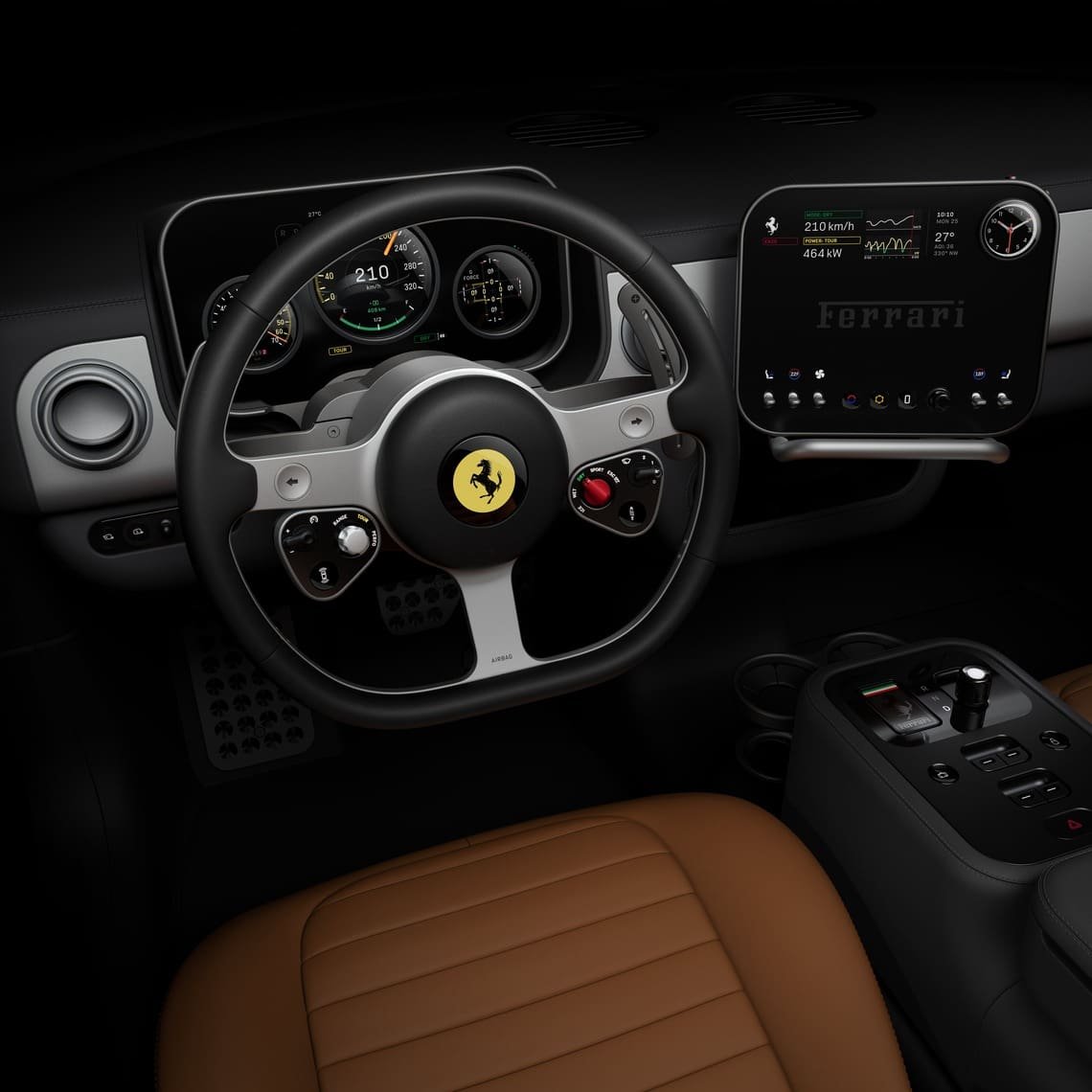
In Maranello’s unfolding electric era, Ferrari reveals the interior and interface philosophy of its first full-electric sports car, the Ferrari Luce. More than a model name, Luce — meaning light — signals a new design language and naming strategy that ushers the Prancing Horse into uncharted territory. Hosted in San Francisco, the reveal spotlighted a cockpit conceived as an expression of clarity, tactility and emotional precision.
The project marks a five-year collaboration with LoveFrom, the creative collective founded by Sir Jony Ive and Marc Newson. Together with Ferrari’s Centro Stile under Flavio Manzoni, the team shaped a cabin that reinterprets interaction for the electric age without surrendering mechanical intimacy. Here, hardware and software are developed in parallel, ensuring the physical architecture and digital behaviour exist in deliberate harmony.
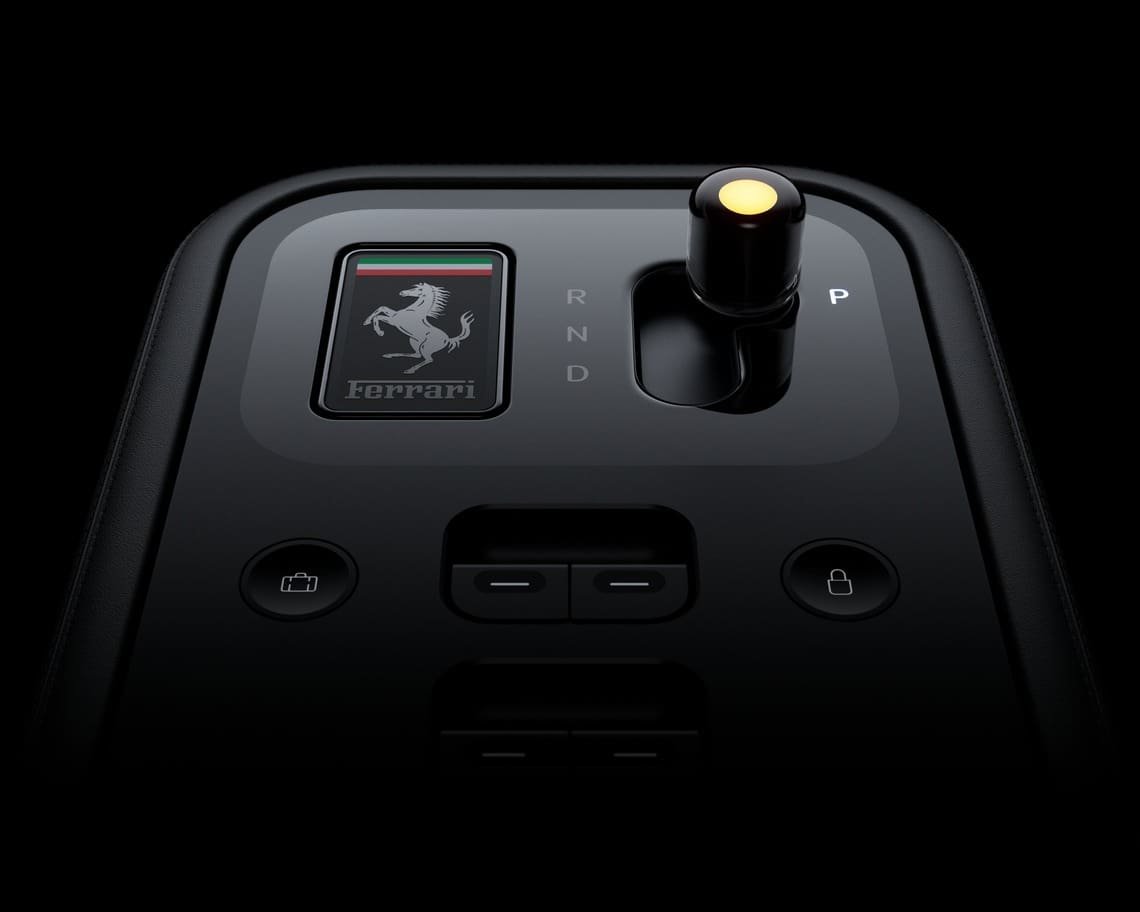
The interior is composed as a single, calm volume, stripped to essential forms in service of driving focus. Inputs and outputs are clearly organised: tactile buttons, dials and toggles coexist with high-resolution digital displays, defying the convention that electric vehicles must be dominated by expansive touchscreens. The result is a cockpit where every movement, press and response feels deliberate, resisting distraction while amplifying engagement.
Materiality forms the backbone of this philosophy. One hundred percent recycled aluminium is machined from solid billets using advanced CNC techniques, then anodised to create a refined micro-texture of enduring colour and hardness. Corning® Gorilla Glass 5® is precision-milled for the control panel, binnacle and central console, balancing optical clarity with scratch resistance. Production processes were considered as carefully as aesthetics, reinforcing Ferrari’s longstanding commitment to authenticity and craftsmanship.
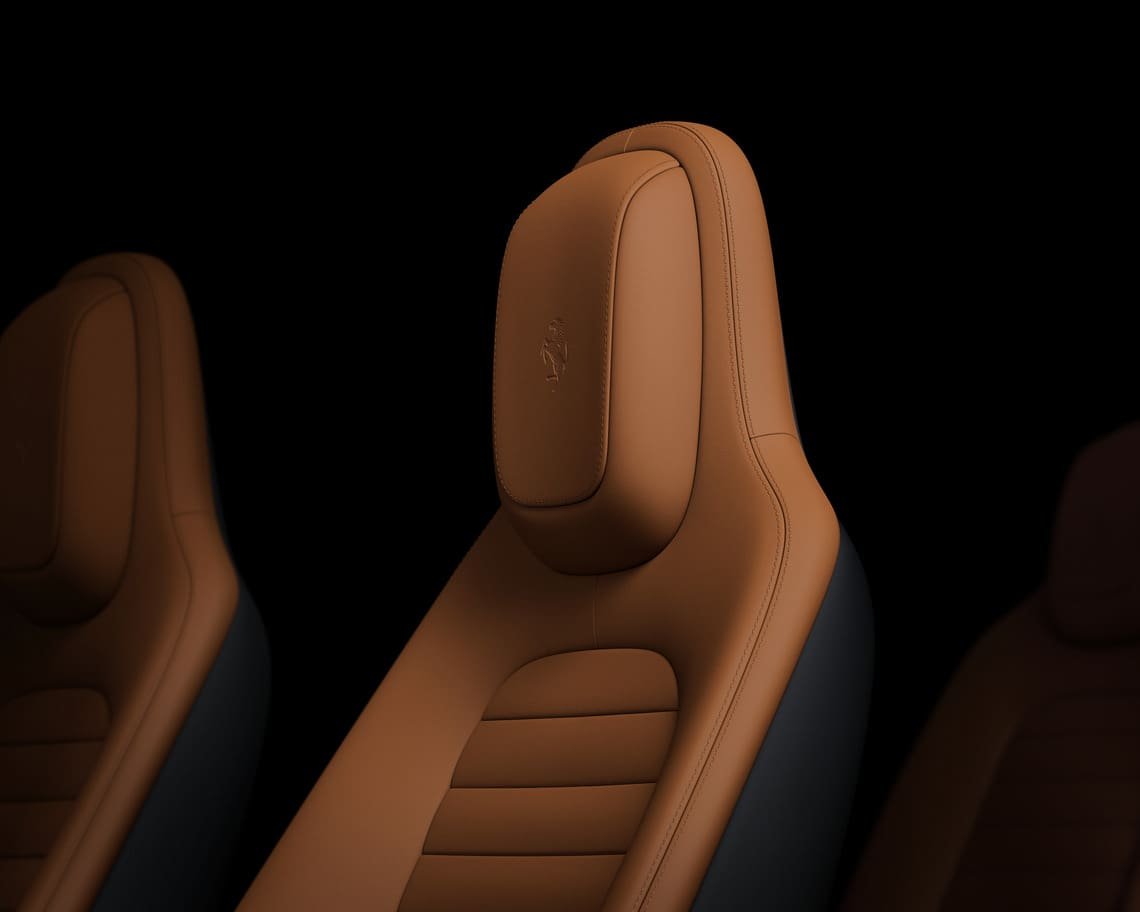
The steering wheel reinterprets the three-spoke Nardi design of the 1950s and 60s in exposed aluminium, engineered to weigh 400 grams less than a standard Ferrari counterpart. Nineteen CNC-machined components form its structure, with analogue control modules inspired by Formula One. Extensive testing refined mechanical and acoustic feedback, ensuring every button press delivers a symphony of precision.