There are coastal resorts that arrive loudly, and then there are those that reveal themselves slowly, through geography, light, and rhythm. Set within a natural fjord on Sardinia’s northeast coast, between Porto Cervo and Baia Sardinia, W Sardinia – Poltu Quatu belongs firmly to the latter. Ahead of its full debut in spring 2026, the hotel already signals a shift in how contemporary luxury engages with place—less performative, more instinctive.
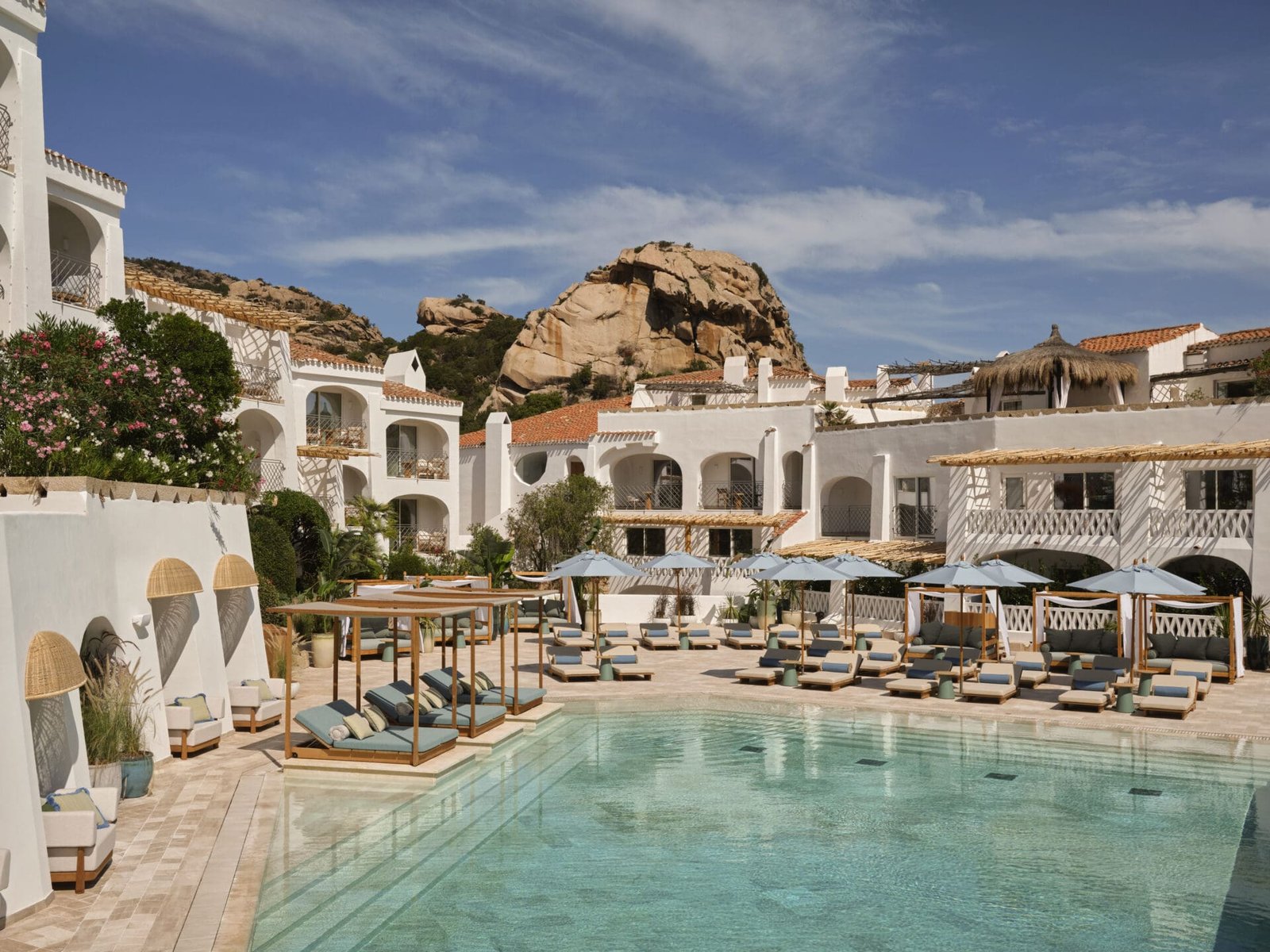
Poltu Quatu translates to “hidden port” in old Sardinian language, and the name is more than poetic. Approached through winding roads and framed by wind-sculpted granite, the whitewashed village feels protected from spectacle. The hotel cascades along the cliffside as a series of interconnected buildings rather than a single imposing form, encouraging movement, discovery, and changing perspectives throughout the day. Light becomes a collaborator here—soft in the morning, reflective by afternoon, and quietly dramatic as the sun drops behind the marina.
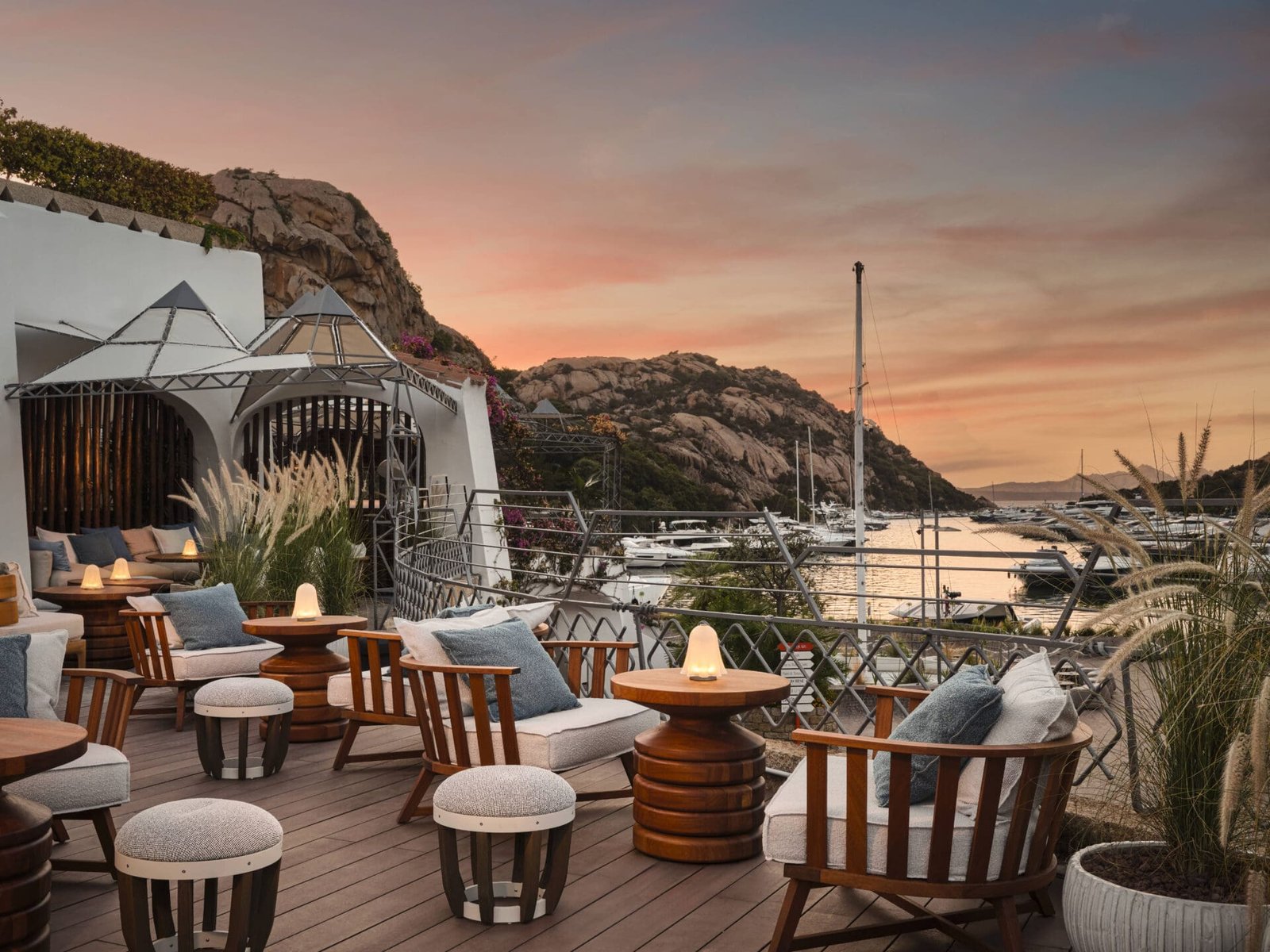
The design, led by Meyer Davis, does not attempt to transplant the W Hotels attitude onto Sardinia. Instead, it negotiates a balance between the brand’s energy and the island’s older, more elemental character. Materials react to time and motion, spaces transition fluidly from social to private, and references to myth, craft, and maritime life are woven into the architecture rather than layered on as decoration. The result feels contemporary without being disruptive—modern hospitality that listens before it speaks.
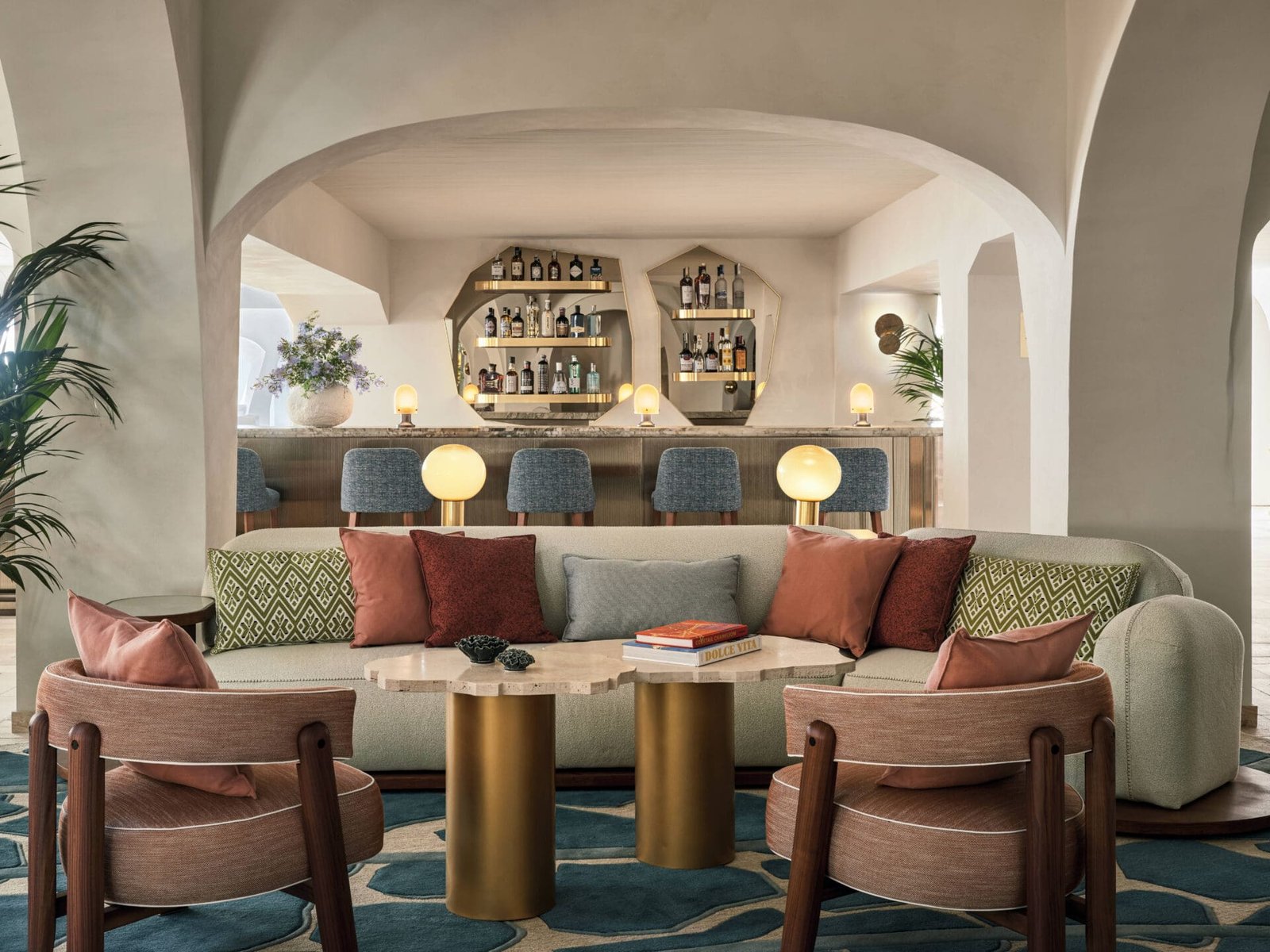
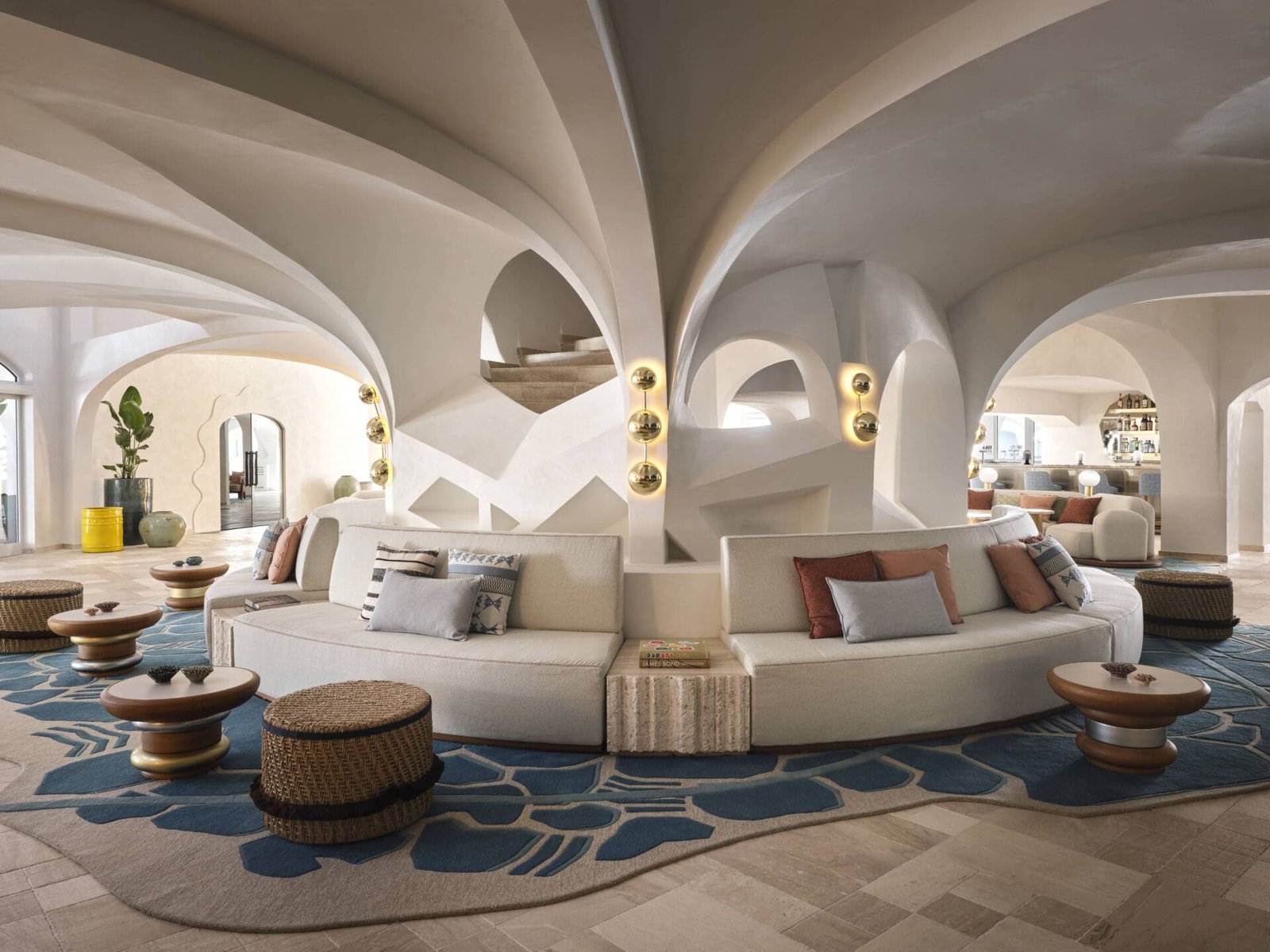
This sensitivity is most apparent in the public spaces. The W Lounge takes cues from objects washed ashore—rope, shell fragments, weathered ceramics—while the lobby subtly references the Janas, the fairy-like figures of Sardinian folklore said to guard caves and seafarers. Even the arrival experience carries meaning: a sculptural W statue by local artist Nicola Filia stands at the entrance, its steel and cracked clay surfaces quietly reminding guests of the island’s rugged beauty and environmental fragility. It is a welcome that feels intentional rather than ornamental.
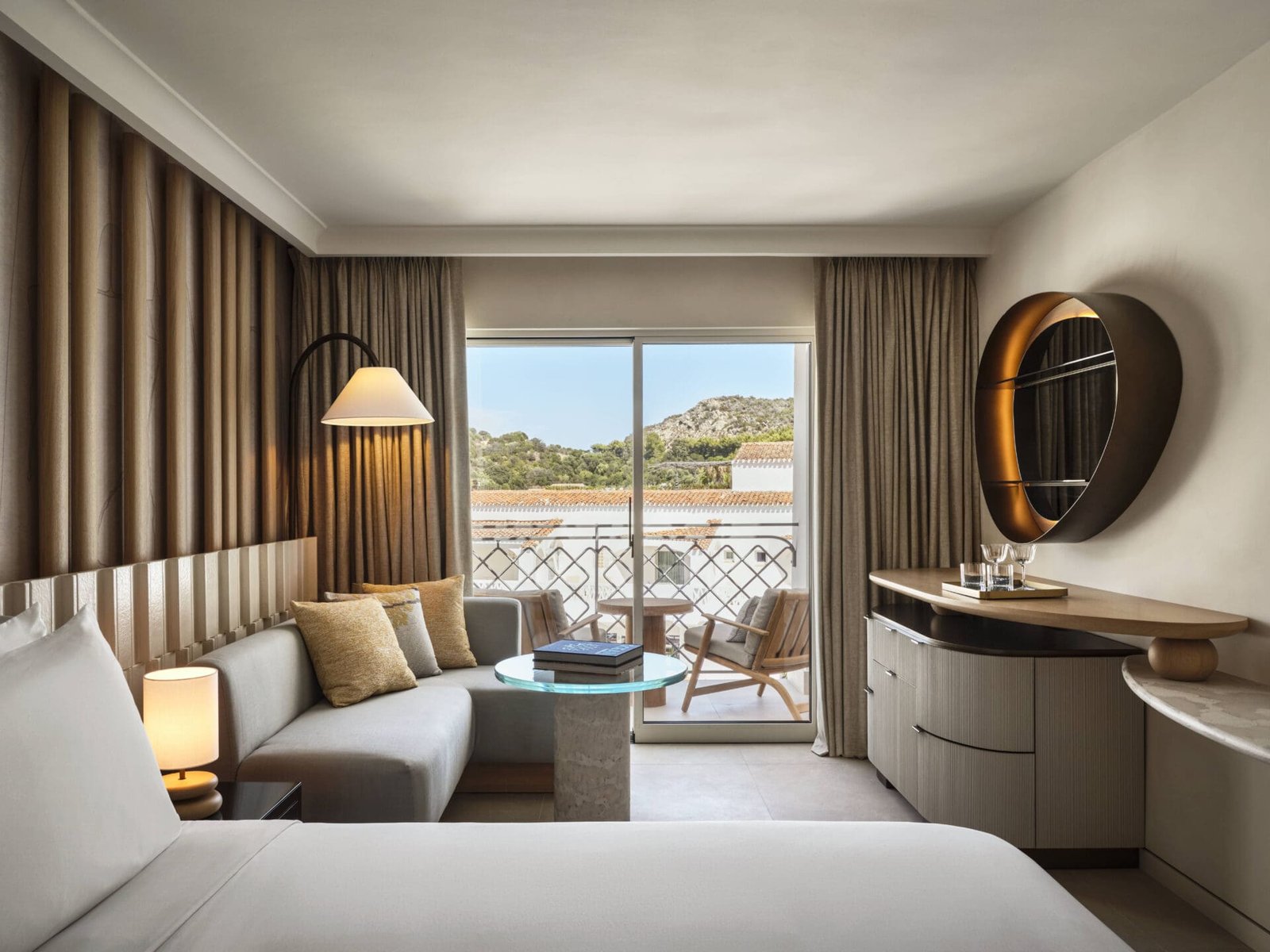
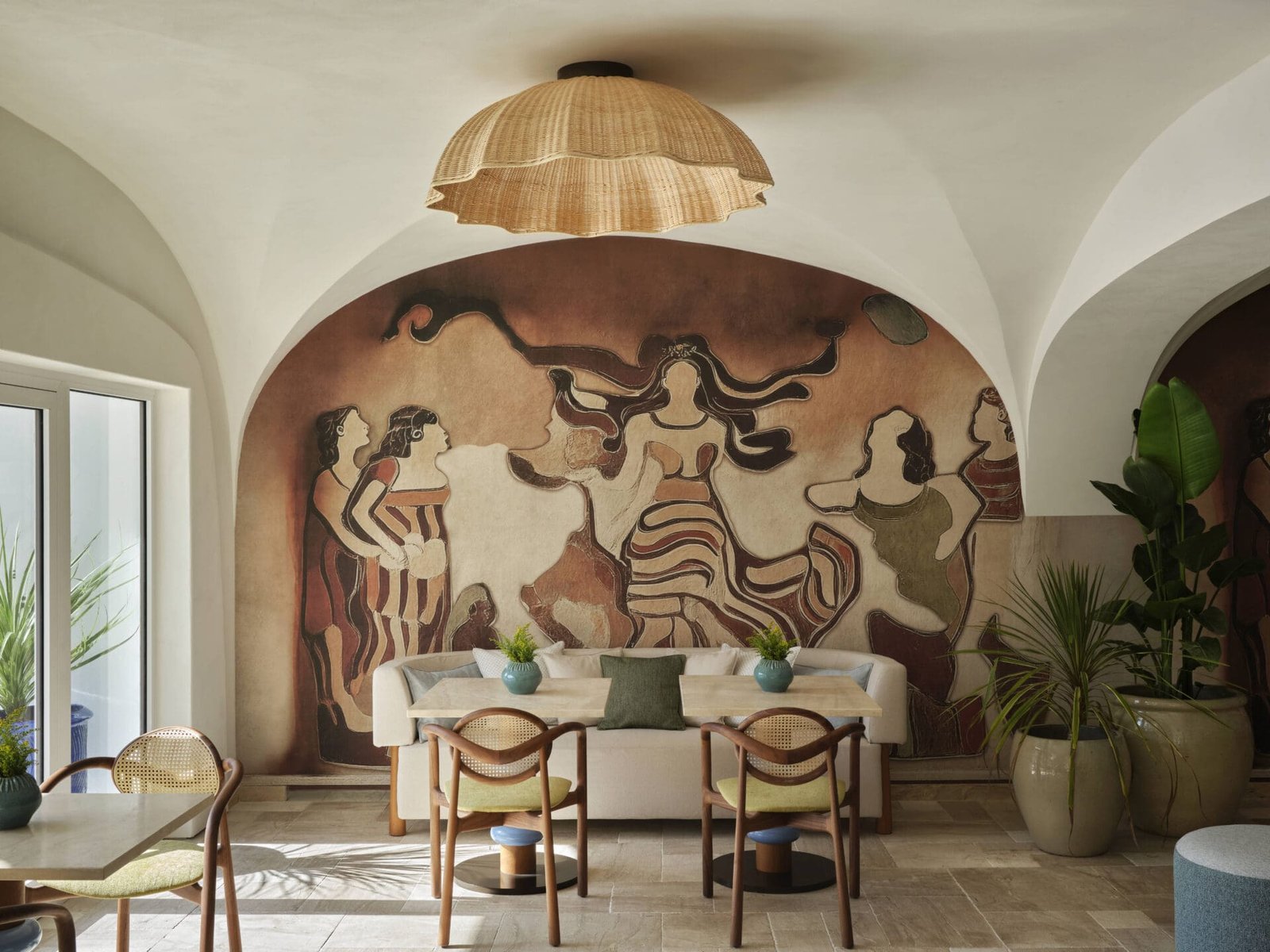
Guestrooms shift the tone further, retreat-like and calm, built around sand and sea hues that echo the surrounding landscape. Art is not imported but sourced locally, from handcrafted ceramics to tapestries and paintings by Sardinian artisans. Even the photography—Aerial views by Giuseppe Chironi—reinforces a sense of location rather than lifestyle aspiration. The effect is immersive without being themed, residential without feeling anonymous.
Dining follows the same philosophy. TANIT, the waterfront seafood restaurant, is designed around movement and flow, both in form and atmosphere. Beneath textured ceilings and sculptural lighting that mirrors underwater currents, guests eat while watching the marina subtly rearrange itself throughout the day. Elsewhere, W Lounge and WET Deck transition organically from daylight ease to evening energy, guided by music, aperitivo rituals, and a pace set by guests rather than schedules.
What ultimately distinguishes W Sardinia – Poltu Quatu is not any single feature, but the coherence of its vision. Wellness extends beyond the gym and spa into sunrise yoga, marina walks, and sea access. Cultural engagement is not confined to curated “experiences” but embedded through artisan collaborations, artist residencies, and slow, hands-on encounters with the island’s creative community. It feels less like a resort designed to impress, and more like one designed to be returned to.