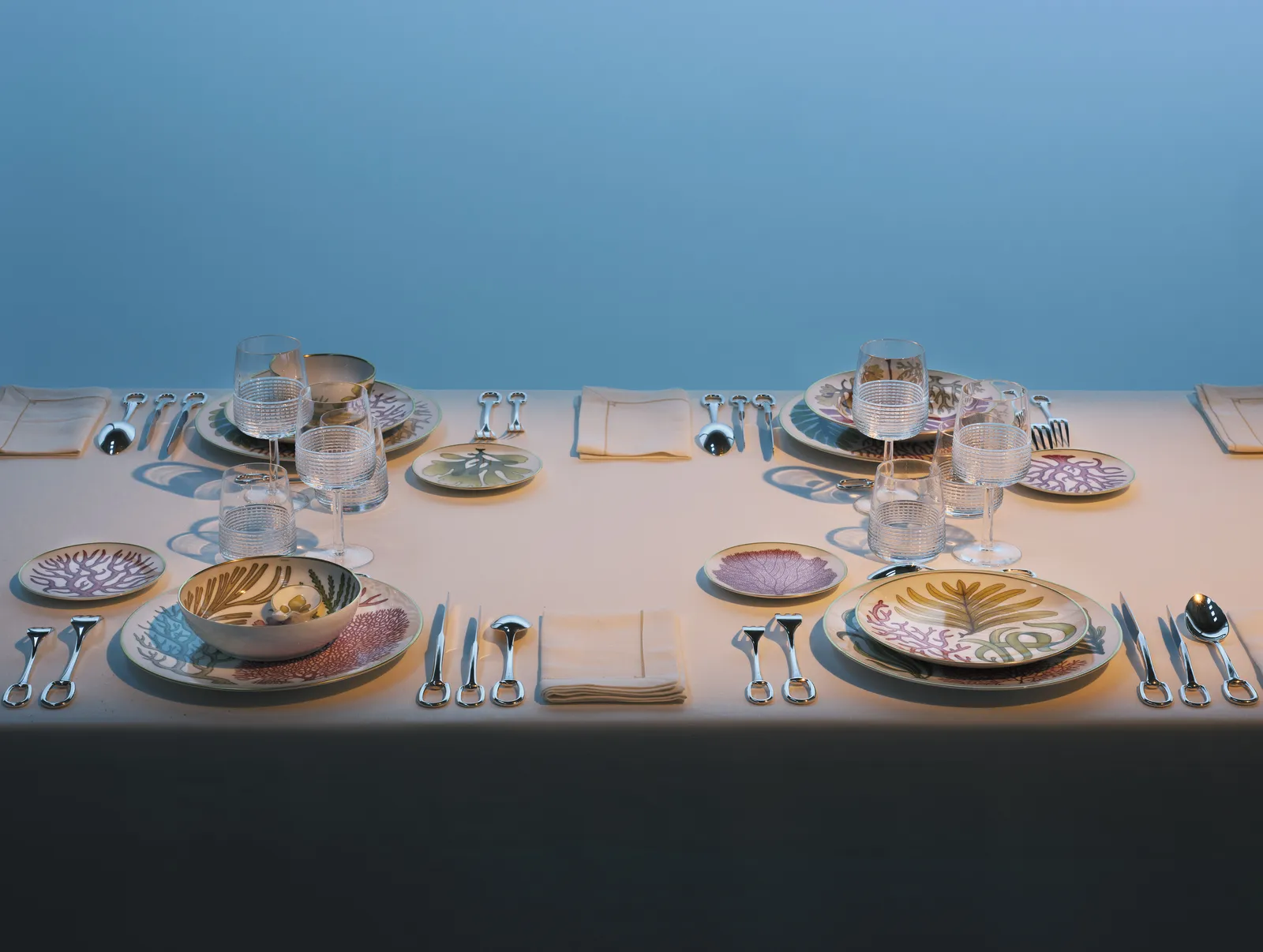
For a house that built its empire on the sturdy leather of the saddle and the wind-swept silk of the carré, the latest journey for Hermès is a quiet, salt-streaked departure. With the launch of Natures Marines, the Maison isn’t just setting the table; it’s inviting the tide into the dining room. This 34-piece porcelain collection feels less like a set of dishes and more like a series of fossils newly discovered on a Welsh coastline, still holding the memory of the currents that shaped them.
The Marine Herbarium on Your Plate
The story of Natures Marines began not in a studio, but in the hushed, climate-controlled archives of London’s Natural History Museum. British illustrator Katie Scott, known for her meticulous botanical studies, spent four years poring over 17th-century marine herbaria. Her focus? Not the obvious drama of coral or the flash of tropical fish, but the quiet, architectural beauty of sea plants.
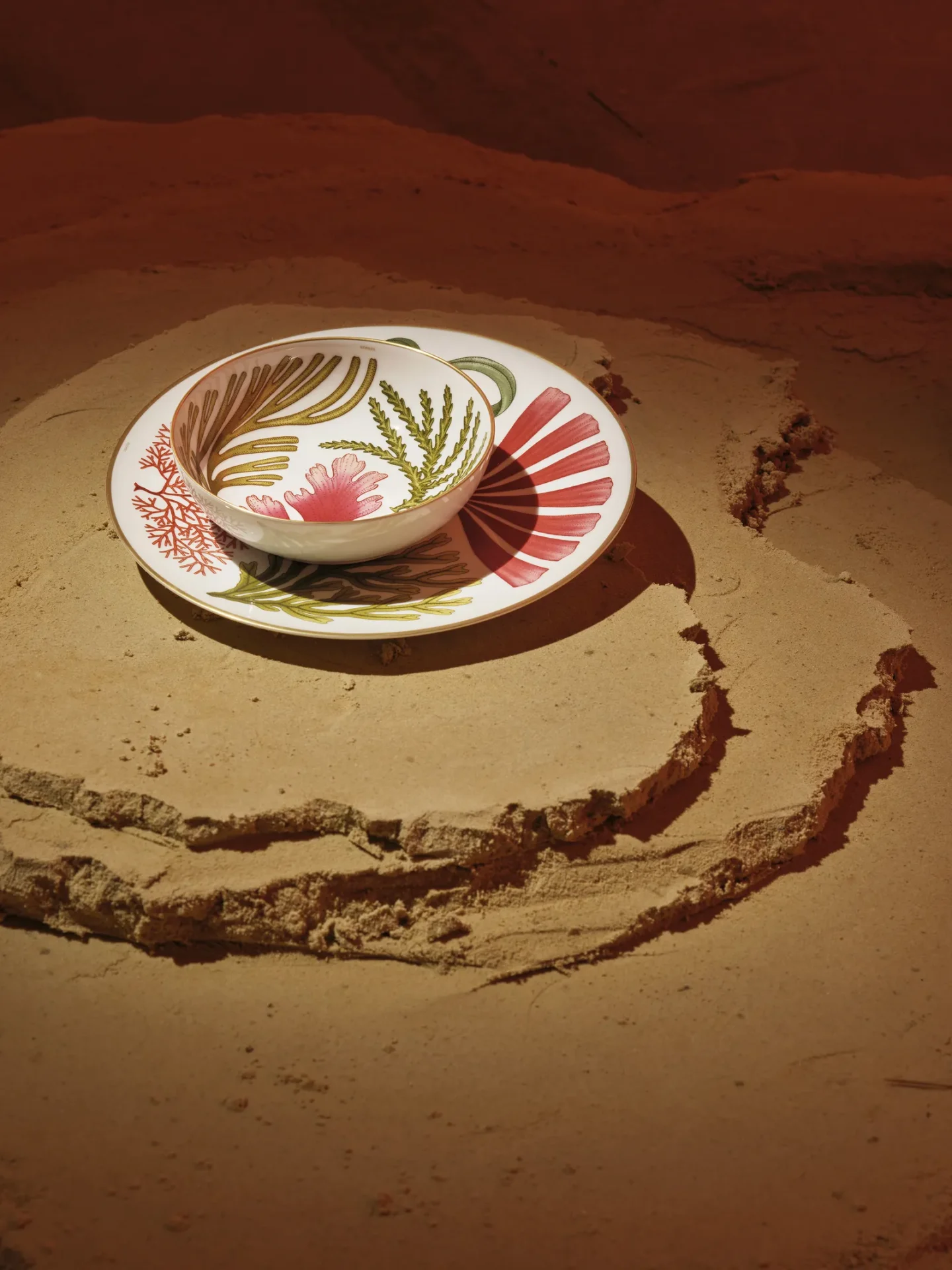
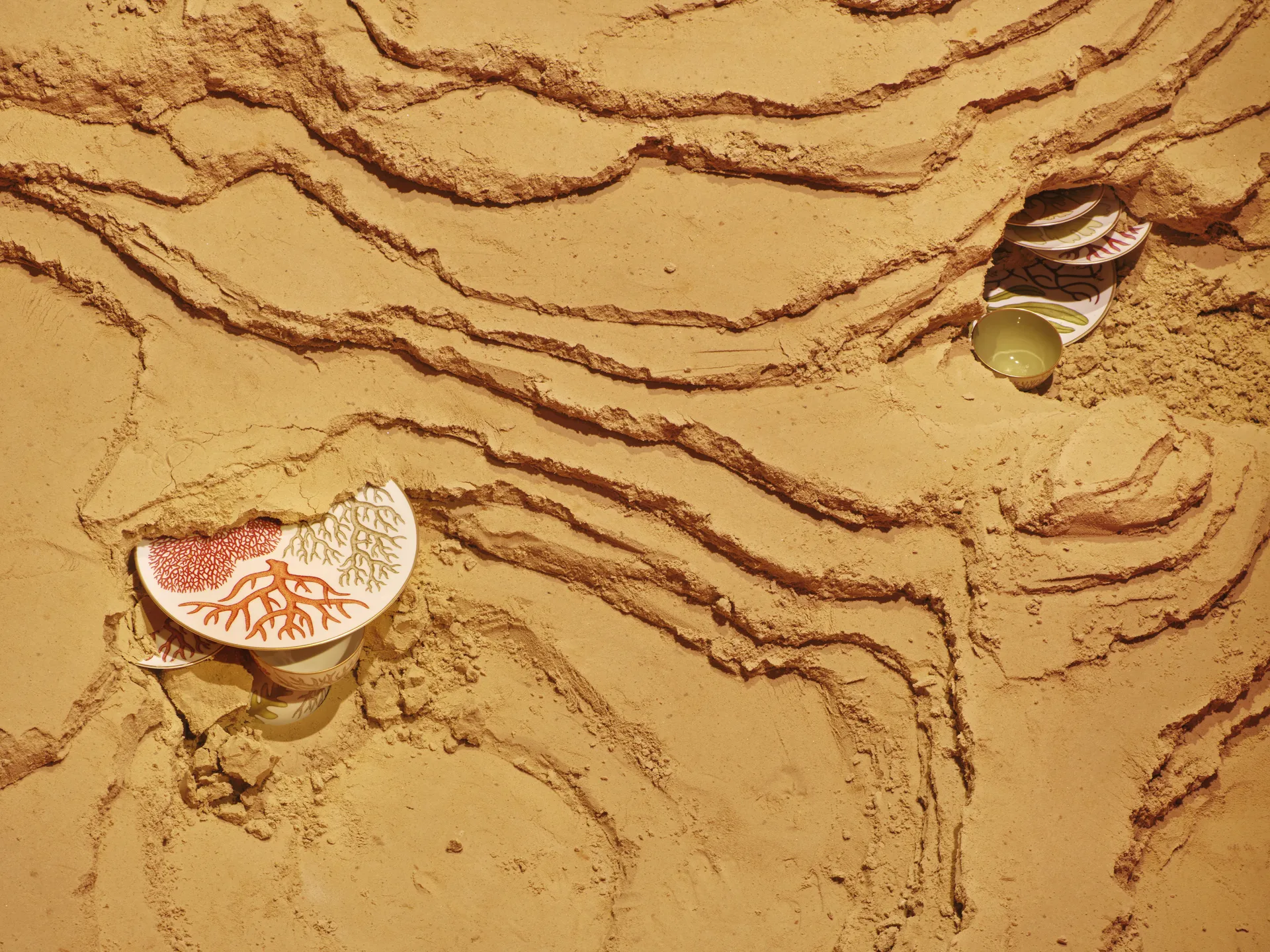
The result is a scientific expedition turned dinner service. Across the collection, you’ll find swaying wakame, delicate samphire, and intricate sea fans. In a rare feat of design, not a single motif is repeated across the entire 34-piece run. Each plate and bowl presents a unique botanical landscape, encouraging a kind of mix-and-match tablescaping that feels instinctive rather than orchestrated.
A Palette of Thirty Shades
While the collection revolves around a sophisticated triad of earthy pink, deep green, and sand, the reality is far more complex. To capture the translucent depth of foliage seen through water, artisans employed nearly 30 distinct shades of pigment. A hand-painted gold line runs through the pieces, acting like a sunbeam caught beneath a wave—a subtle reminder of the luxury grounding these organic forms.
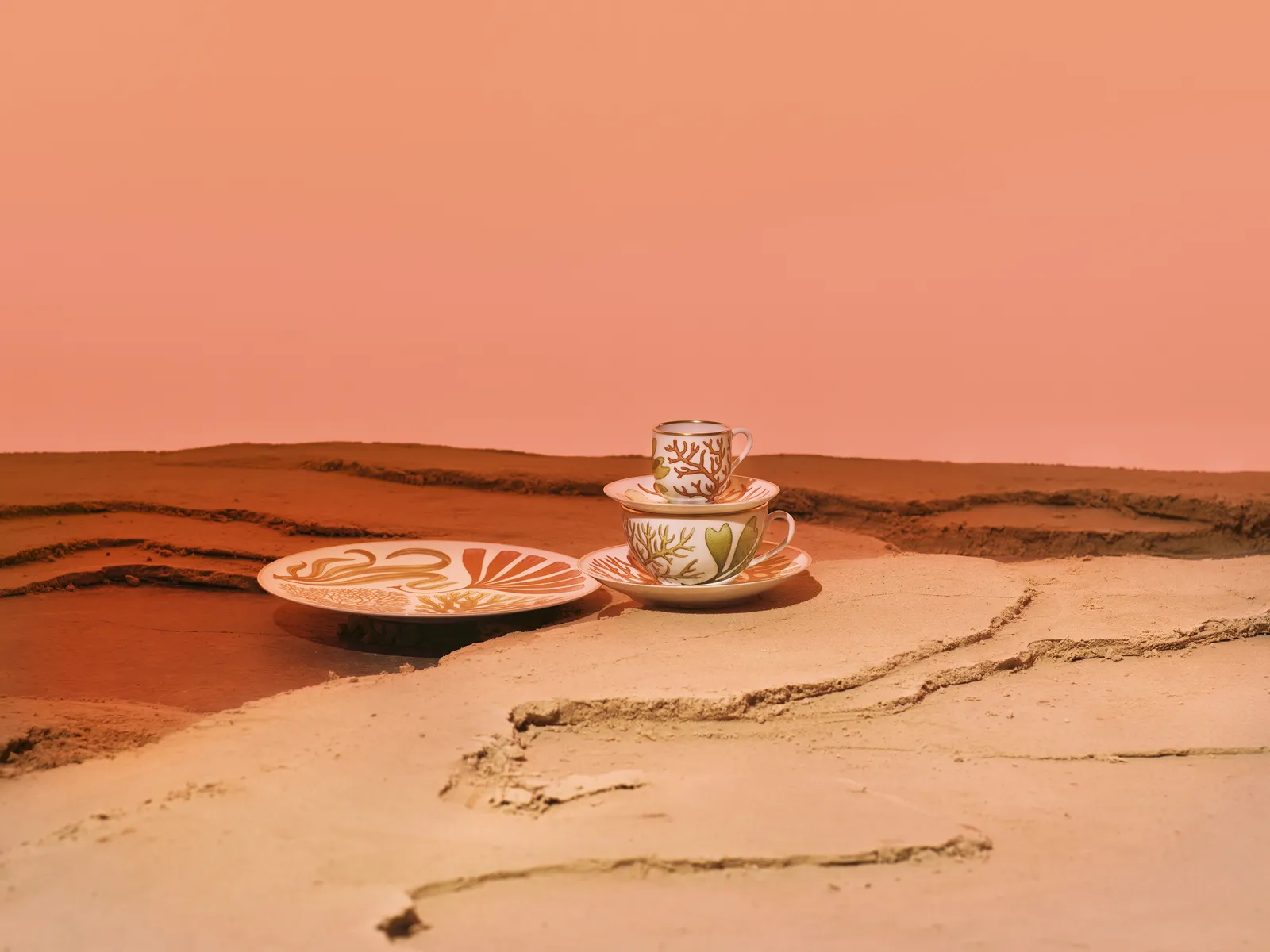

“Natures Marines isn’t about setting the table. It’s about turning the table into a marine landscape that is dreamy, quiet, and slightly surreal.”
Tableware That Prefers to Drift
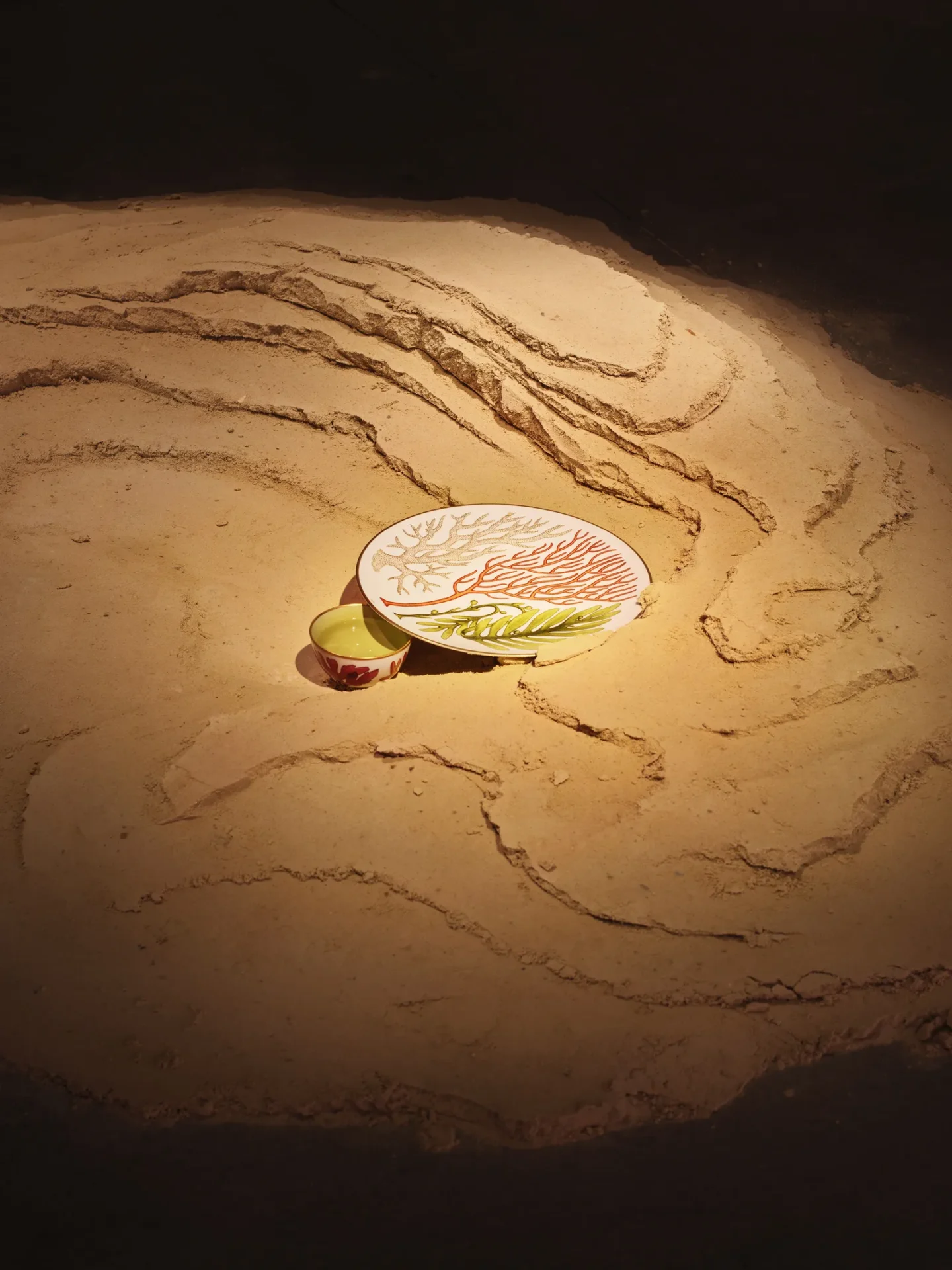
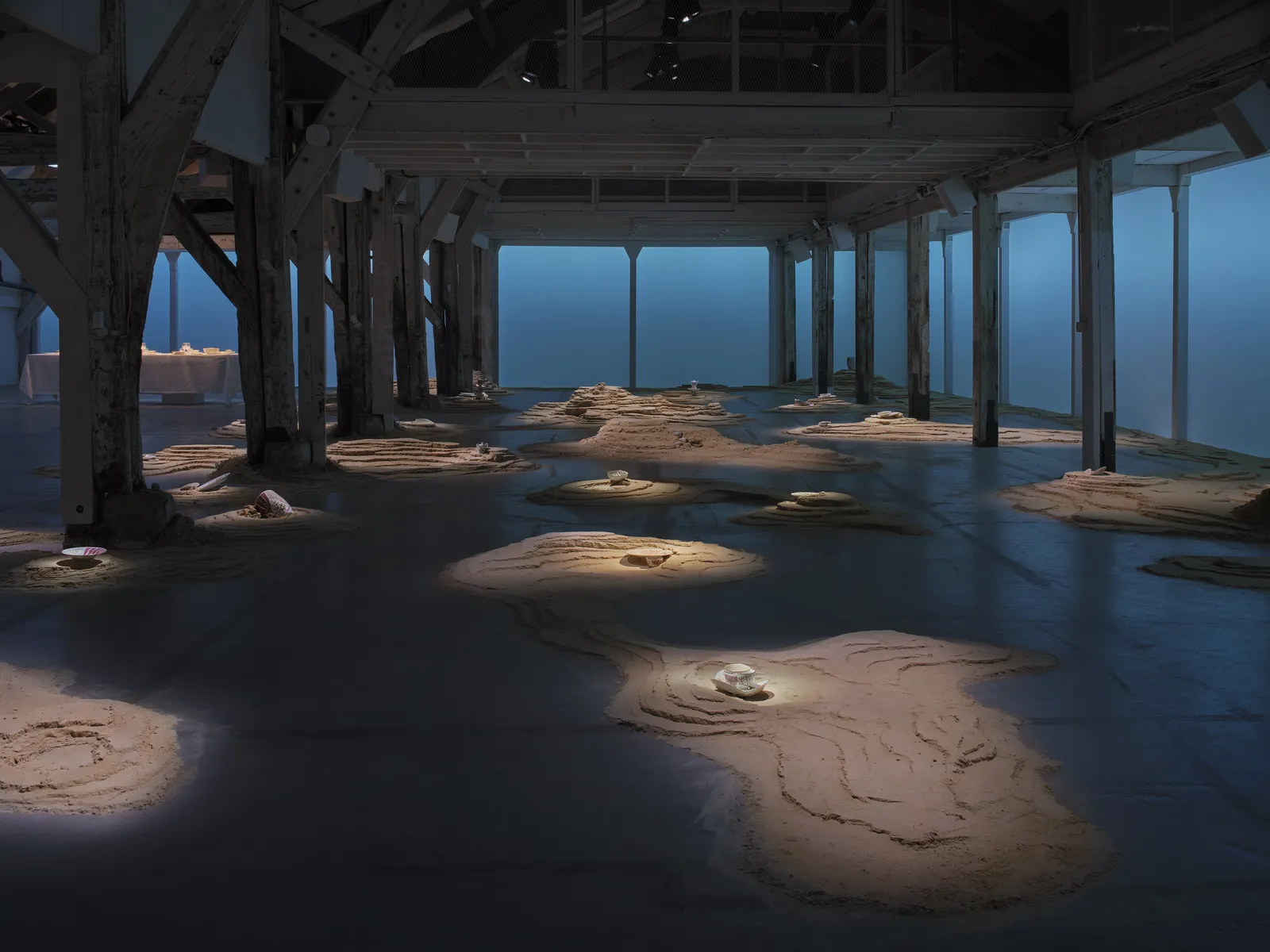
During its presentation at Paris Design Week, the collection was staged inside an old carpentry workshop on a tidal landscape of sand. Plates were partially buried, and bowls were half-revealed, as if the tide had just gone out to leave these porcelain treasures behind. It’s a collection that rejects the “performance” of traditional luxury in favor of something much more grounded—literally.
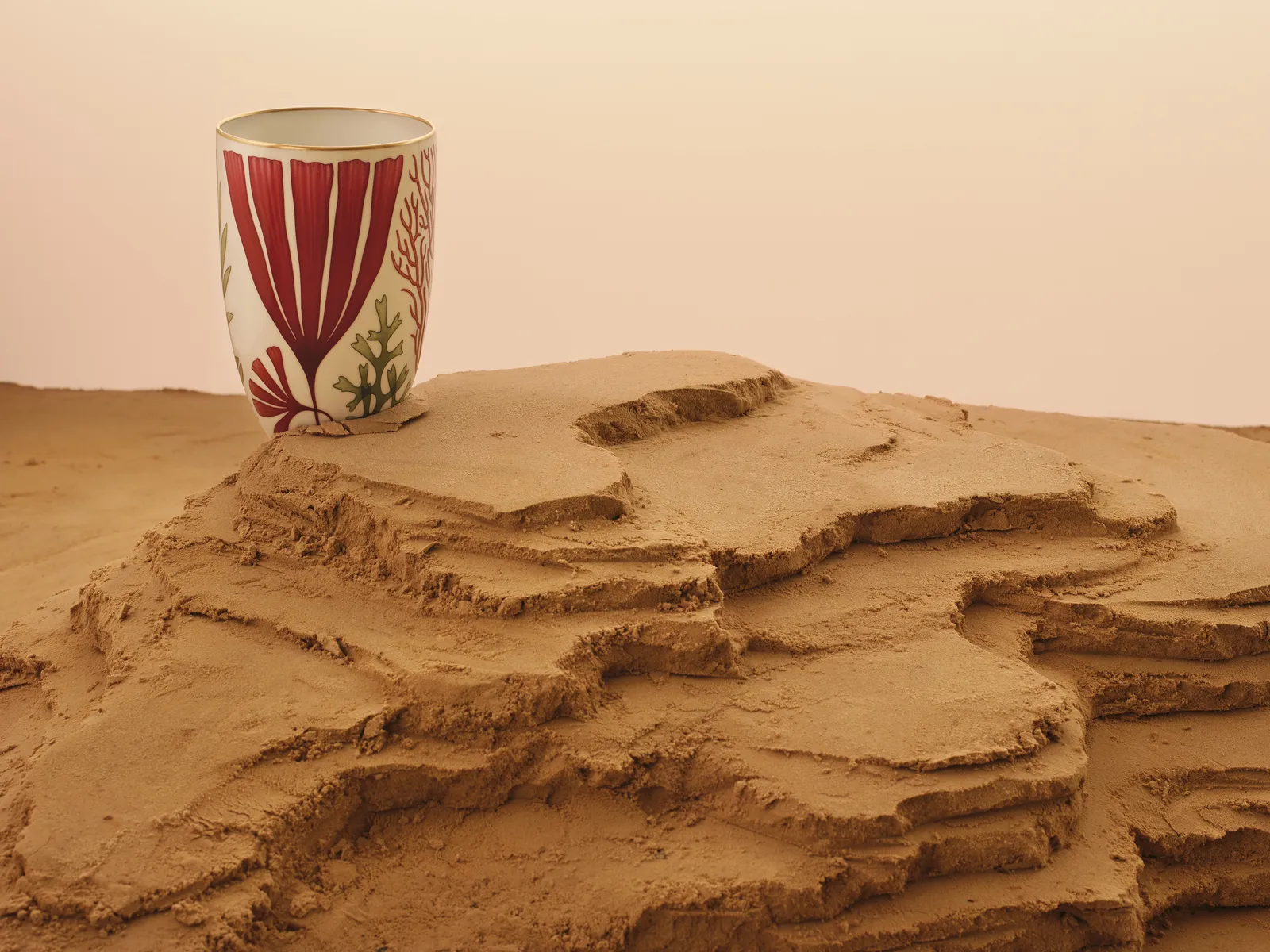
Whether it’s for an intimate evening of root vegetable tarts and bitters or a grand seaside lunch, these pieces represent a welcome return to lush, figurative illustration for Hermès. It is tableware that listens to the ocean rather than trying to decorate it.