The air in Molsheim carries a different weight when a Sur Mesure masterpiece prepares to leave the Atelier. It is the scent of polished carbon, hand-stitched hides, and the quiet electricity of a vision realized. For one particular collector, the delivery of the W16 Mistral ‘Fly Bug’ is not merely the acquisition of a hyper-roadster; it is the final, shimmering movement in a four-part symphony inspired by the delicate intricacies of the natural world.
Following the ‘Hellbug,’ ‘Hellbee,’ and the mathematically hypnotic ‘Lady Bug,’ the ‘Fly Bug’ takes its cues from the dragonfly. It is a fitting muse for the Mistral—a car designed to master the wind. The dragonfly is a marvel of evolutionary engineering, capable of maneuvers that defy physics, wrapped in a gossamer-thin aesthetic. In the hands of Bugatti’s design team, led by Frank Heyl, this biological brilliance has been distilled into a machine that feels less like a vehicle and more like a predatory jewel.

Why the W16 Mistral ‘Fly Bug’ Defines Bespoke Luxury
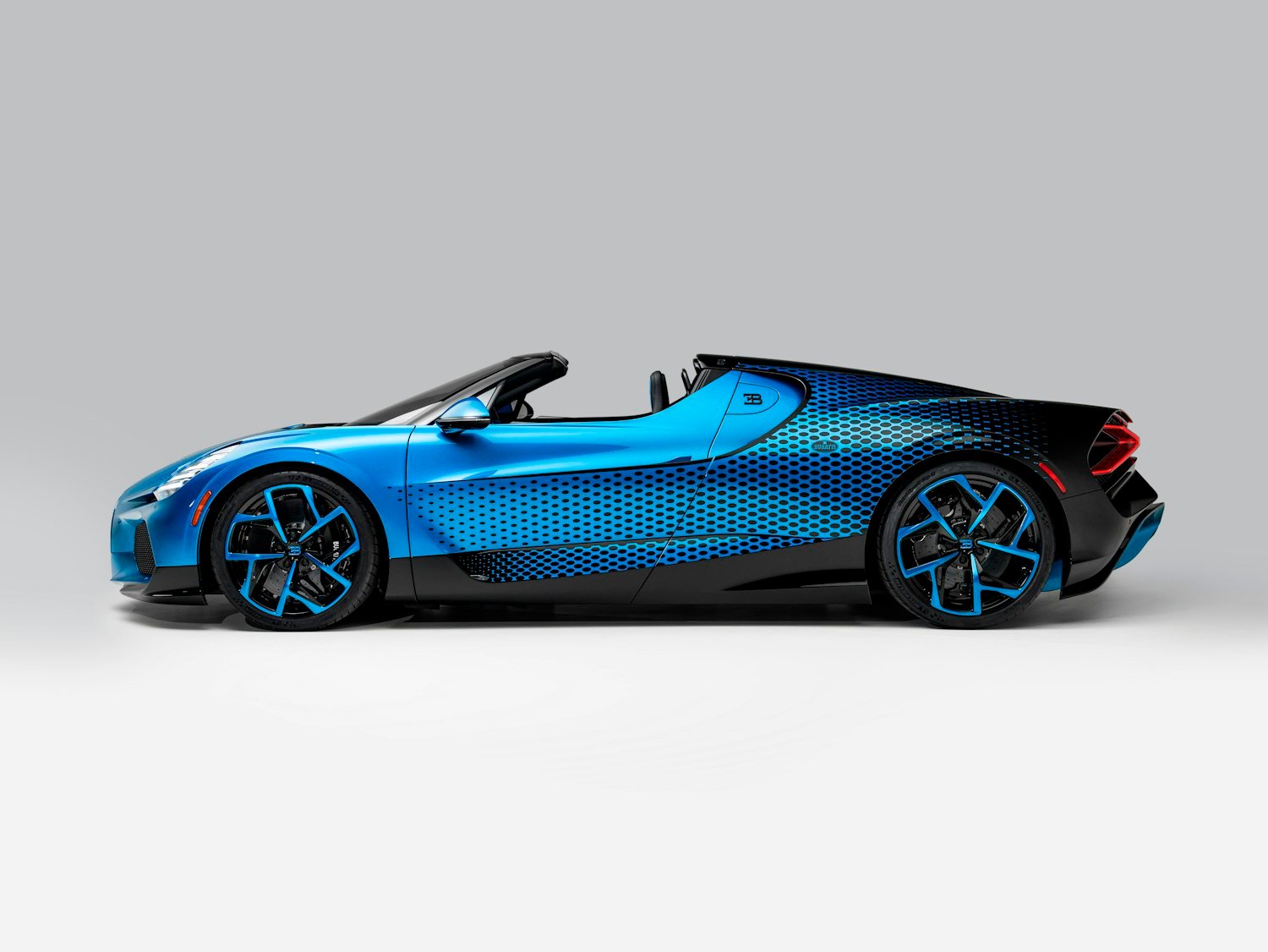
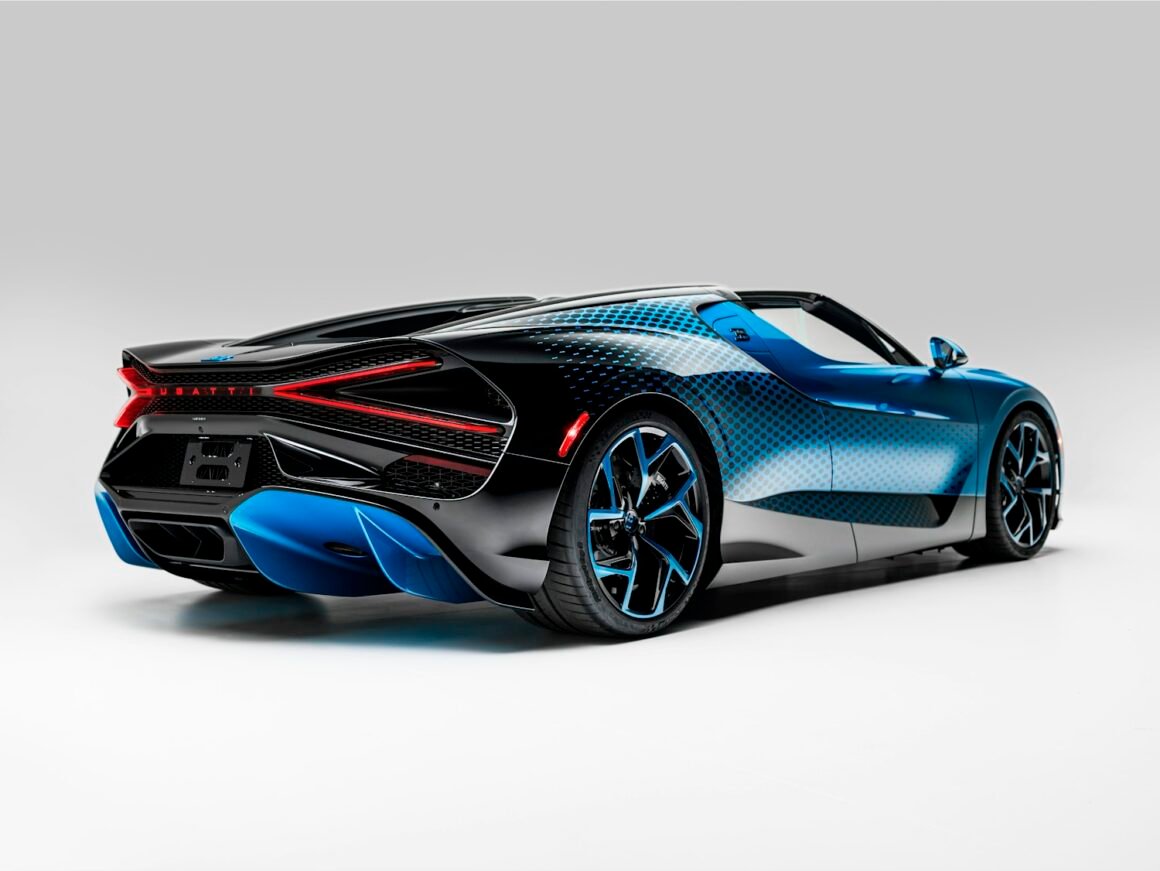
What makes this specific commission exceptional is the transition from organic inspiration to technical execution. The ‘Fly Bug’ introduces a bespoke paintwork aptly named ‘Dragonfly Blue.’ This is not a static pigment; it is a living finish that shifts from deep, abyssal cobalt to a piercing turquoise depending on the kiss of the sun. It mimics the structural coloration found in nature, where light doesn’t just hit a surface—it dances within it.
The exterior is defined by a complex ellipse pattern that serves as the visual heartbeat of the car. These forms originate at the front and grow in density as they sweep toward the rear, eventually dissolving into the dark maws of the air intakes. This isn’t a simple wrap or a standard spray; it is a painstaking application that requires the steady hands of artisans who view a carbon-fiber panel with the same reverence a Renaissance painter held for a fresh canvas.
The Artistry of the Interior: A Tactile Transformation
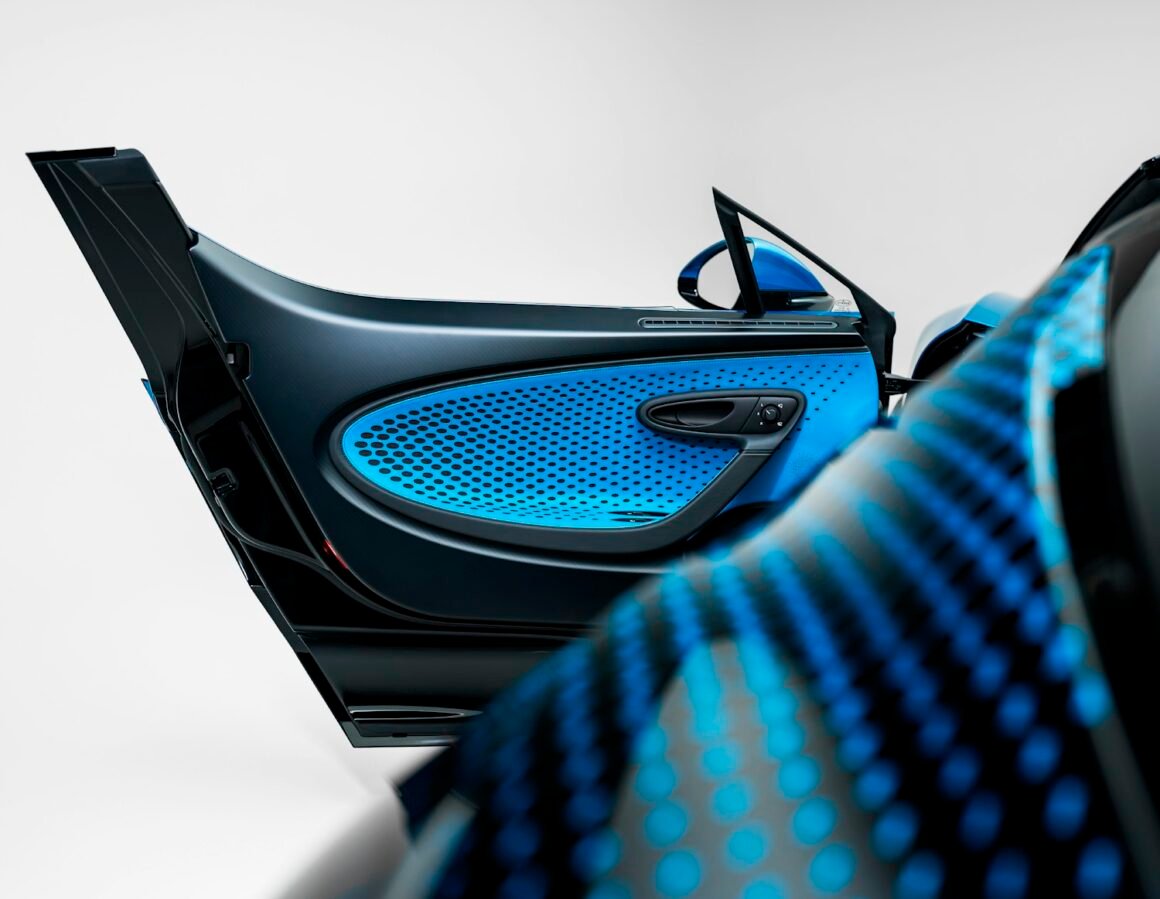
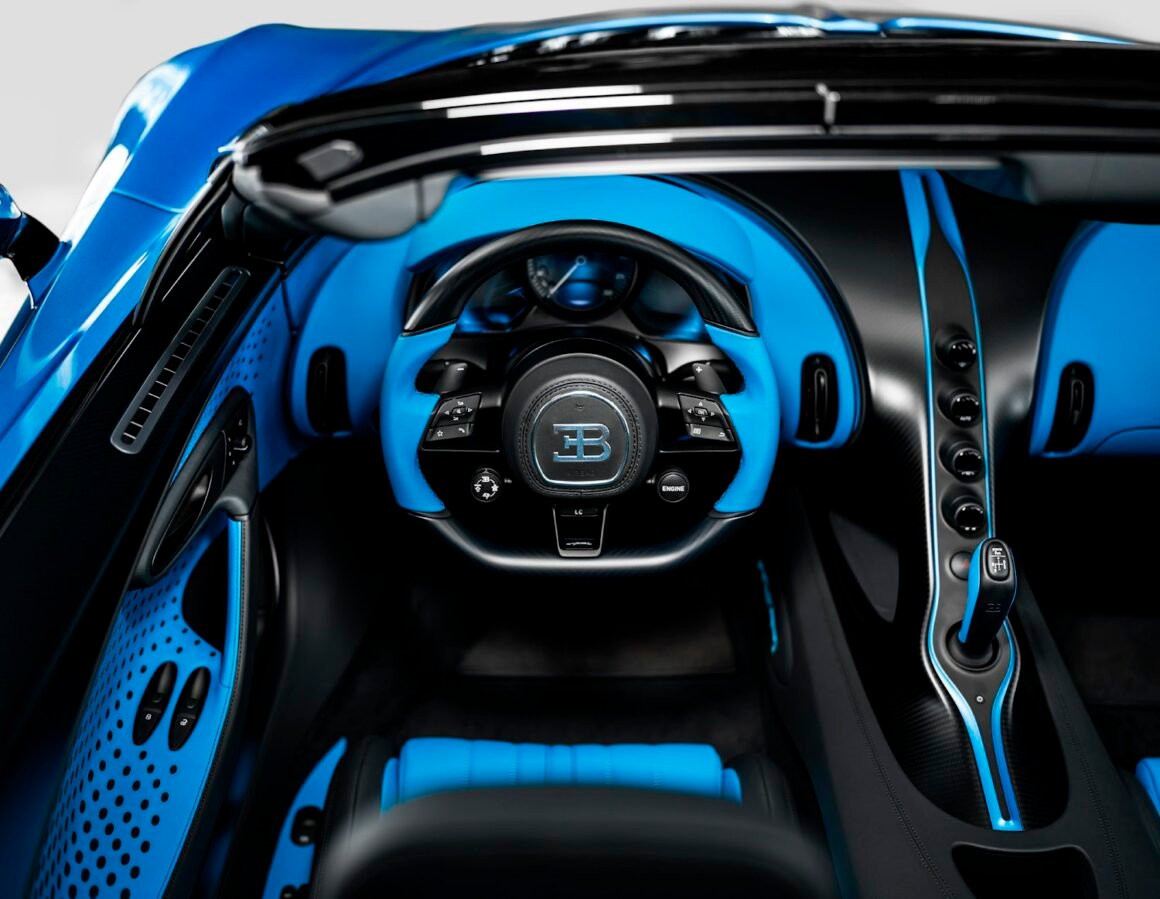
To step inside the ‘Fly Bug’ is to enter a cocoon of high-tech sensory indulgence. For the first time, Bugatti’s engineers and the Color, Materials, and Finish (CMF) team in Berlin have developed a multi-layered material that challenges the traditional boundaries of upholstery.
- The Foundation: High-grade leather is meticulously laid over Alcantara.
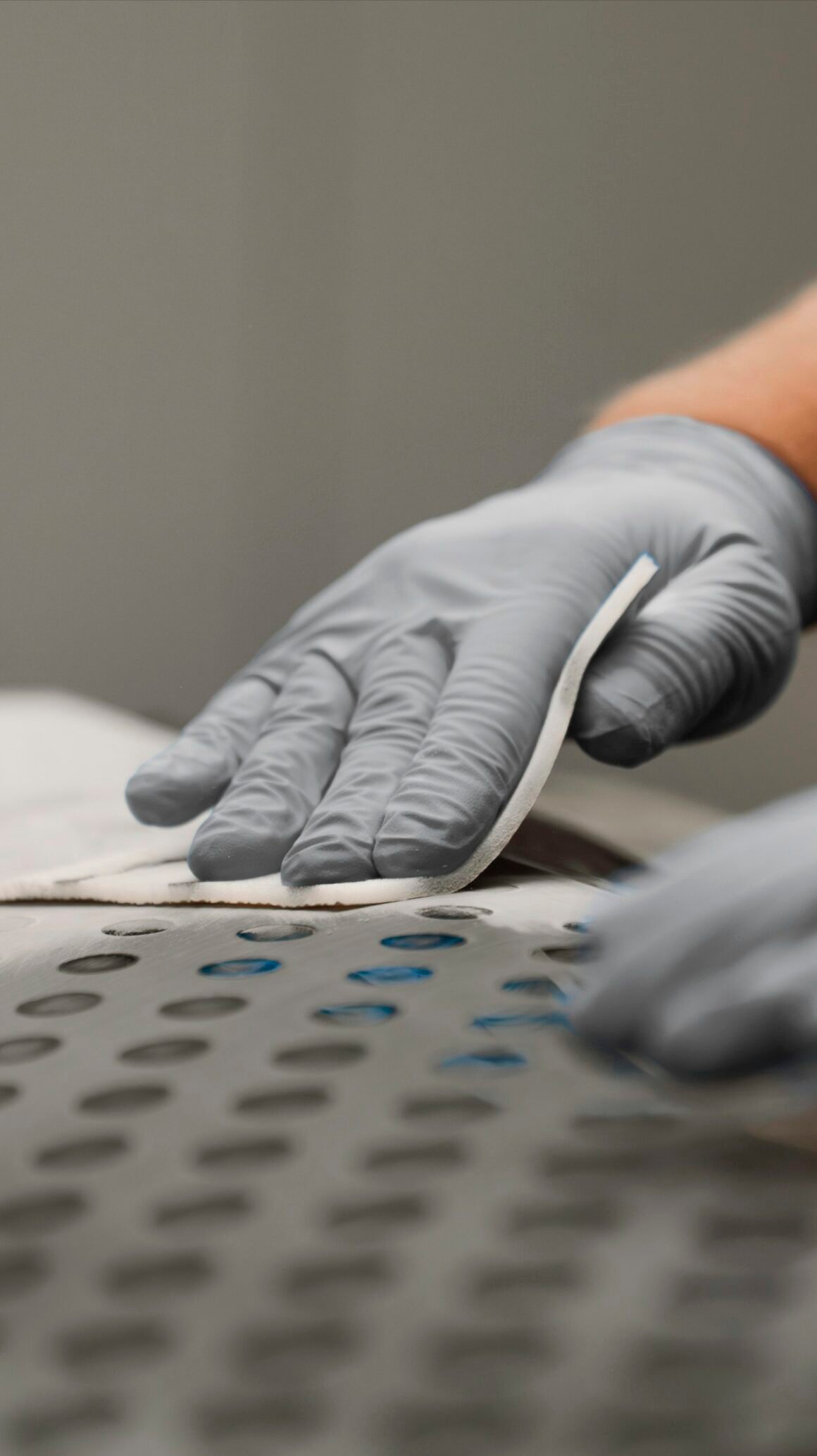
- The Technique: A geometric ellipse pattern is laser-cut and finished to provide a three-dimensional depth.
- The Result: A tactile landscape that mirrors the iridescence of the exterior, marking the first time a graphic pattern has flowed seamlessly across both the door panels and the armrests.
Every curve was a battlefield of precision. Ensuring the leather sat perfectly across the Mistral’s complex interior geometry required months of prototyping. The result is a cabin that feels atmospheric, grounded in the “story-centric” philosophy where every stitch serves the narrative of the dragonfly’s flight.
A Century of Heritage Woven into Modernity
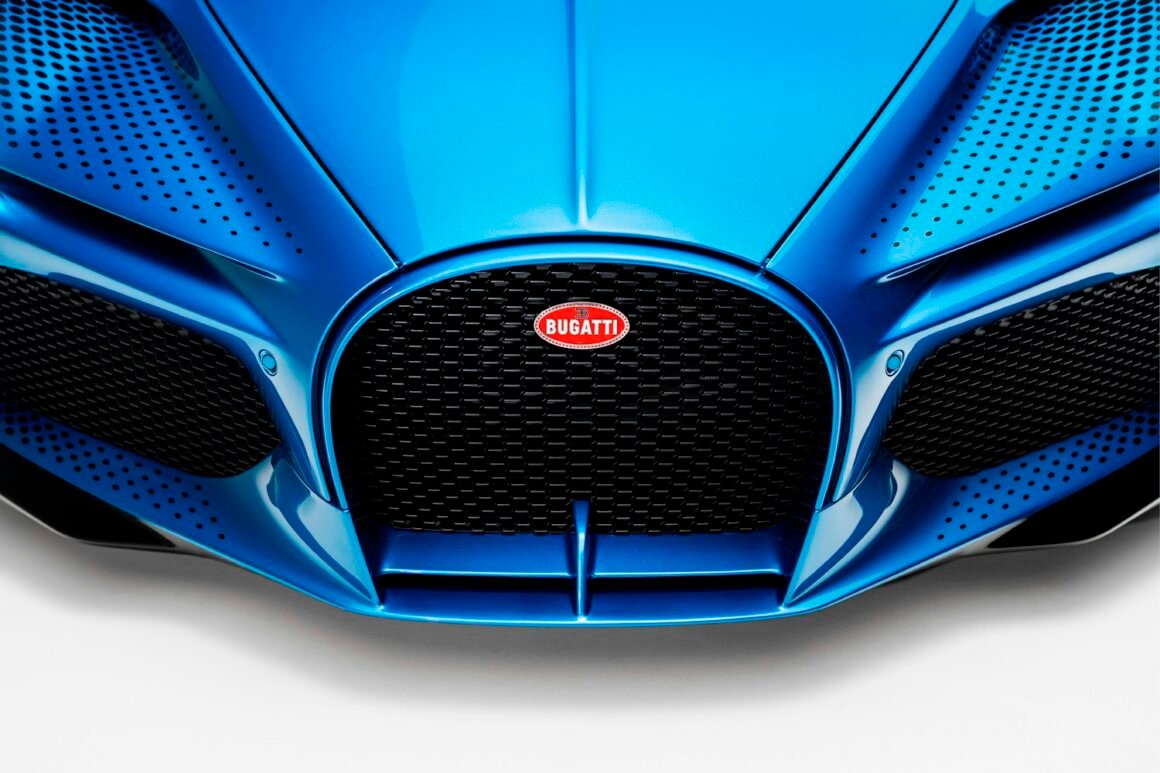
The ‘Fly Bug’ also marks a historic first for the marque’s visual identity. At the client’s request, the Bugatti Macaron—the iconic red oval that has graced the horseshoe grille since the days of Ettore—has been integrated directly into the exterior ellipse graphic on the car’s flank.
This required a delicate recalibration of scale and positioning to ensure the emblem’s signature ring of dots and precise lettering remained uncompromised. It is a subtle nod to the brand’s 117-year history, anchored further by the ‘Dancing Elephant’ sculpture encased within the gear selector—a tribute to Rembrandt Bugatti and a bridge between the mechanical power of the W16 engine and the artistic soul of the family.
The Legacy of the W16 Mistral Sur Mesure
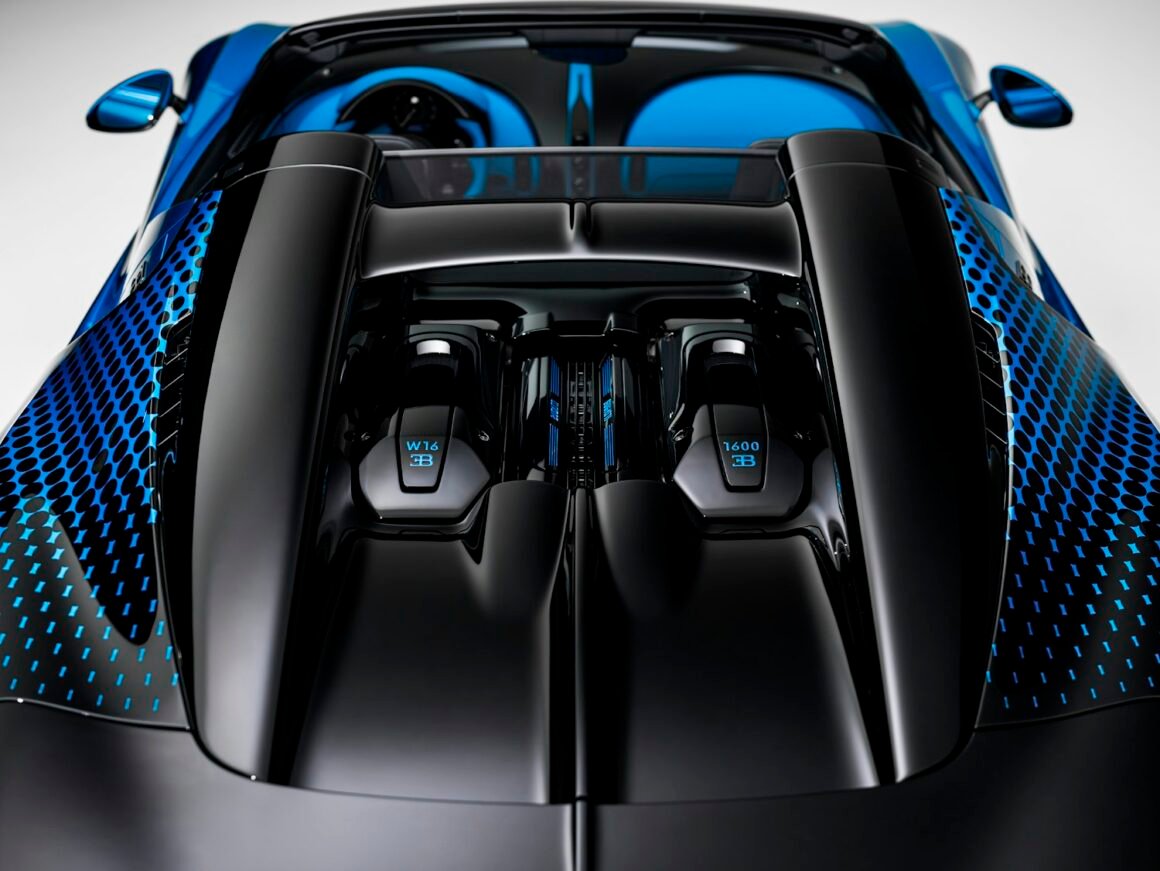
As the final roadgoing appearance of the legendary W16 engine, the Mistral is already a collector’s ghost—a legend felt before it is even gone. The ‘Fly Bug’ ensures that this farewell is anything but quiet. It represents the pinnacle of E-E-A-T (Experience, Expertise, Authoritativeness, and Trust) in the automotive world, proving that Bugatti does not just build cars; they curate legacies.
For the collector, this is the conclusion of a journey through the fauna of the imagination. For the rest of the world, the ‘Fly Bug’ is a reminder that in the upper echelons of luxury, the most powerful statement isn’t how fast you go—though 1,600 PS certainly helps—but how beautifully you move through the world.